
Cheap vs High-End Furniture: How Assembly Difficulty and Quality Differ
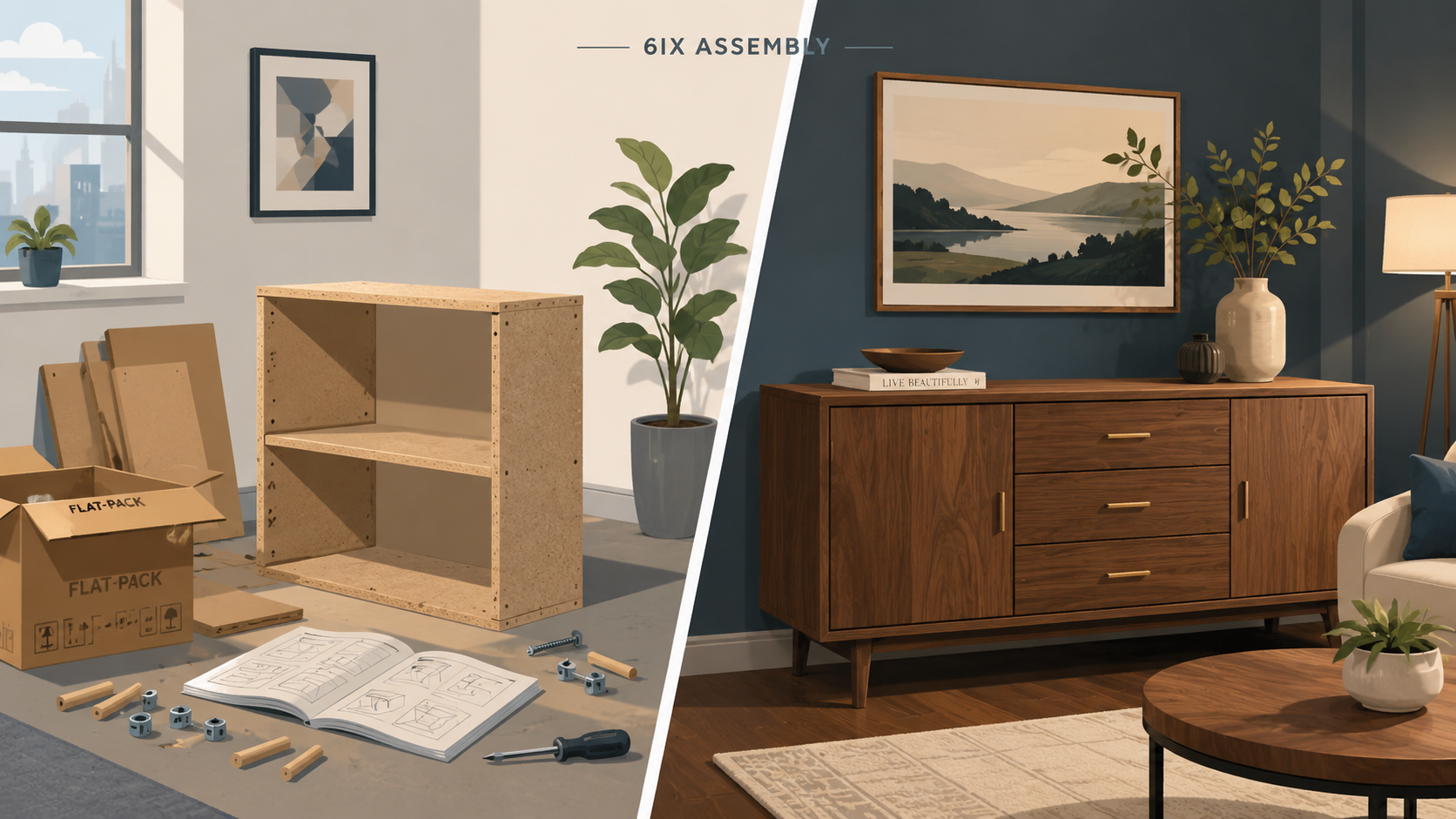
Not all furniture is built the same, and anyone who has ever opened a box full of loose panels, mystery hardware, and a 32-page instruction booklet knows exactly what that means.
At first glance, a cheap dresser and a high-end dresser might look similar online. Same colour. Same number of drawers. Same staged photo with a plant on top. But once the boxes arrive, the difference becomes obvious fast.
Cheap furniture is not just cheaper because the materials cost less. It is often cheaper because the customer becomes part of the manufacturing process. You are the one lining up panels, tightening cam locks, adjusting drawers, anchoring tall units, and hoping everything squares up properly.
High-end furniture usually works differently. More of the precision is handled before it reaches your home. The materials are usually stronger, the hardware is often better, and the final setup may require less guesswork. That does not mean expensive furniture is always easy to assemble, but it does mean the problems are usually different.
Here is how cheap and high-end furniture really differ when it comes to quality, assembly difficulty, durability, and what homeowners should know before buying.
Cheap Furniture Usually Saves Money Up Front
Budget furniture has a clear advantage: the price.
For renters, students, first-time homeowners, condo owners, or anyone furnishing a space quickly, cheap flat-pack furniture can make a lot of sense. It is affordable, boxed efficiently, easier to transport, and often available immediately.
That is why brands like IKEA, Wayfair, Structube, Amazon, Walmart, and other flat-pack retailers are so popular. You can furnish an entire room without spending custom-furniture money.
But there is a trade-off.
Cheap furniture often shifts the labour onto you. The lower price usually means the product arrives in more pieces, with more hardware, more alignment points, and more room for small mistakes during assembly.
A simple bookcase, dresser, TV stand, bed frame, or wardrobe may look easy online, but once you open the box, you might be dealing with:
Loose panels
Dowels
Cam locks
Drawer slides
Shelf pins
Back panels
Wall anchors
Tiny screws
Plastic brackets
Unclear diagrams
Heavy pieces that need to be held in place while fastening
That is where people get surprised. They think they bought a cheap piece of furniture, but they also bought a few hours of labour.
High-End Furniture Usually Costs More Because More Work Is Already Done
High-end furniture usually costs more because the material quality, construction, finishing, and factory labour are stronger.
Instead of thin particleboard and paper foil, higher-end pieces may use better veneers, thicker engineered cores, solid wood components, stronger fasteners, better drawer systems, or more precise joinery.
Some premium furniture arrives mostly assembled. Some requires only legs, handles, shelves, or anti-tip hardware. Some custom or designer pieces may even include white-glove delivery and setup.
That changes the experience completely.
With cheaper furniture, the hard part is usually getting the structure square, stable, and aligned.
With higher-end furniture, the hard part is often handling the weight, protecting the finish, and making sure the piece is placed, levelled, and anchored properly.
So expensive furniture is not automatically “easy.” A large solid wood bed, dining table, wardrobe, or media unit can still be heavy, awkward, and difficult to move through tight spaces. But the actual construction is usually more forgiving because the product itself is made with better tolerances.
Materials Make a Huge Difference
The biggest quality difference usually starts with the materials.
Budget furniture commonly uses particleboard, MDF, fibreboard, paper foil, laminate, or thin veneer. These materials are not automatically bad. In many homes, they work perfectly fine when assembled correctly and used properly.
But they are less forgiving.
If a screw is over-tightened, it can strip.
If a cam lock is misaligned, the panel can chip.
If a back panel is installed slightly crooked, the whole unit can rack.
If a drawer slide is mounted unevenly, the drawer may never feel right.
If the piece gets moved too many times, the joints can loosen.
High-end furniture usually has stronger construction. Solid wood, thicker panels, better veneers, proper joinery, better drawer boxes, and stronger hardware all help the piece stay rigid over time.
That is why two dressers can look similar in photos but feel completely different in real life. One feels hollow and wobbly. The other feels heavy, solid, and planted.
Cheap Furniture Can Be Harder to Assemble Than People Expect
This is the part most customers underestimate.
Cheap does not always mean simple.
In fact, some lower-cost furniture is harder to assemble because the manufacturer is trying to keep the product affordable. That can mean thinner panels, more small parts, basic hardware, and less room for error.
A budget dresser with six drawers can be much more annoying than an expensive dresser that arrives mostly assembled. Every drawer has to be built. Every slide has to line up. Every panel has to stay square. One small mistake early on can create problems later.
Common issues with cheaper furniture assembly include:
Drawer gaps that look uneven
Doors that do not close properly
Back panels that do not sit flush
Cam locks that do not catch
Pieces that feel wobbly after assembly
Hardware that strips easily
Instructions that rely only on pictures
Parts that look nearly identical but are not interchangeable
This is why professional assembly matters more than people think. A lot of cheap furniture can still look good and last longer when it is assembled carefully, squared properly, and anchored where needed.
Bad assembly can make decent furniture feel cheap. Good assembly can make budget furniture perform much better than expected.
High-End Furniture Has Different Assembly Challenges
High-end furniture is usually better built, but that does not mean it is always easier to deal with.
The challenge is often weight, finish protection, and placement.
A premium dining table, bed frame, wardrobe, office unit, or media console may come with fewer pieces, but each piece can be heavier, more delicate, and more expensive to damage.
With high-end furniture, mistakes cost more.
Dragging a finished panel across the floor can scratch it.
Forcing a threaded bolt can damage the insert.
Leaning a heavy piece against the wrong surface can dent the edge.
Skipping levelling can make doors and drawers look off.
Failing to anchor a tall unit can create a safety risk.
So while high-end furniture often has better hardware and fewer frustrating steps, it still needs careful handling.
The goal is not just “put it together.” The goal is to protect the finish, align everything properly, level it, place it correctly, and make sure it feels as solid as it should.
The Hidden Cost Is Time
When people compare cheap and expensive furniture, they usually look at the purchase price only.
That is a mistake.
The real cost includes time, labour, frustration, tools, cleanup, packaging disposal, and the risk of assembling it wrong.
A cheap bed frame might save you money at checkout, but if it takes three hours, needs two people, comes with unclear instructions, and leaves you with a mountain of cardboard and foam, the savings may not feel so great anymore.
A higher-end piece may cost more, but if it arrives mostly assembled, installs faster, and lasts longer, the value can make more sense.
That is especially true in Toronto condos, apartments, and townhomes where space is tight. Assembly can be harder when you are working around elevators, small bedrooms, narrow hallways, underground parking, tight corners, and limited room to lay out panels.
Furniture assembly is not just about the item. It is also about the space.
Durability Depends on Both Quality and Assembly
A cheap piece that is assembled properly can last years.
A high-end piece that is handled poorly can still get damaged.
Quality matters, but assembly matters too.
For flat-pack furniture, proper assembly is what gives the piece its strength. The back panel, fasteners, dowels, drawer slides, brackets, and wall anchors all work together. If one part is rushed or installed wrong, the whole unit can feel weaker.
For high-end furniture, proper setup protects the investment. Levelling, tightening, careful placement, and safe anchoring all help the piece perform the way it was designed to.
This is especially important for:
Tall bookcases
Wardrobes
Dressers
TV stands
Wall units
Office furniture
Beds
Dining tables
Storage cabinets
Kids’ furniture
Anything tall, heavy, or drawer-based needs to be taken seriously. If it can tip, rack, shift, or loosen, it needs proper setup.
When Cheap Furniture Makes Sense
Cheap furniture is not automatically a bad choice. Sometimes it is the right choice.
Budget furniture makes sense when:
You are renting
You move often
You need something quickly
You are furnishing a temporary space
You are working with a tight budget
The item is low-risk and lightly used
You do not need it to last forever
A basic bookcase, desk, nightstand, shoe cabinet, or temporary dresser can be completely reasonable if it fits the purpose.
The key is being honest about expectations. Do not buy budget furniture and expect heirloom quality. Buy it because it solves a practical problem at the right price.
When High-End Furniture Makes Sense
High-end furniture makes more sense when you care about long-term use, better materials, a stronger feel, or a more polished finish.
It is usually worth considering for:
Primary bedroom furniture
Dining tables
Office setups
Living room focal pieces
Large wardrobes
Media units
Custom-sized pieces
Furniture you plan to keep for years
If the piece is going to be used daily, moved rarely, or become a major part of the room, spending more can be the smarter move.
The higher price can buy better structure, better finish, better hardware, and better long-term value.
What to Check Before Buying Any Furniture
Before buying furniture, do not just look at the photos. Look at the details.
Check the materials. Is it particleboard, MDF, veneer, solid wood, metal, glass, or a mix?
Check the assembly instructions. If the manual is available online, open it before you buy.
Check the number of boxes. More boxes usually means more parts, more handling, and more time.
Check the weight. Heavy pieces may need two people, especially in condos or tight spaces.
Check if wall mounting is required. Many wardrobes, dressers, bookcases, and cabinets require anti-tip hardware.
Check the reviews carefully. Look for comments about damaged parts, confusing instructions, weak drawers, poor alignment, or long assembly time.
Check whether packaging removal is included if you are hiring someone. Large furniture boxes can create a lot more waste than people expect.
The Bottom Line
Cheap furniture wins on price, convenience, and flexibility.
High-end furniture wins on feel, finish, strength, and long-term value.
But the real difference shows up during assembly. Cheap furniture usually demands more precision from the person building it. High-end furniture usually demands more care from the person handling it.
Neither option is automatically right or wrong. The best choice depends on your budget, your space, how long you plan to keep the piece, and how much time you want to spend dealing with instructions, hardware, levelling, anchoring, and cleanup.
At 6IX Assembly, we assemble furniture across Toronto and the GTA for homes, condos, apartments, offices, and commercial spaces. Whether it is budget flat-pack furniture or a higher-end piece that needs careful handling, we focus on proper alignment, secure assembly, clean setup, and a finished result that looks the way it should.
Our service is fully insured, includes cleanup and packaging removal, and is backed by a 12-month workmanship warranty.
If you want your furniture assembled properly without losing your evening to confusing instructions and loose hardware, 6IX Assembly can help.
