
IKEA Furniture Assembly Tips That Can Save You Hours
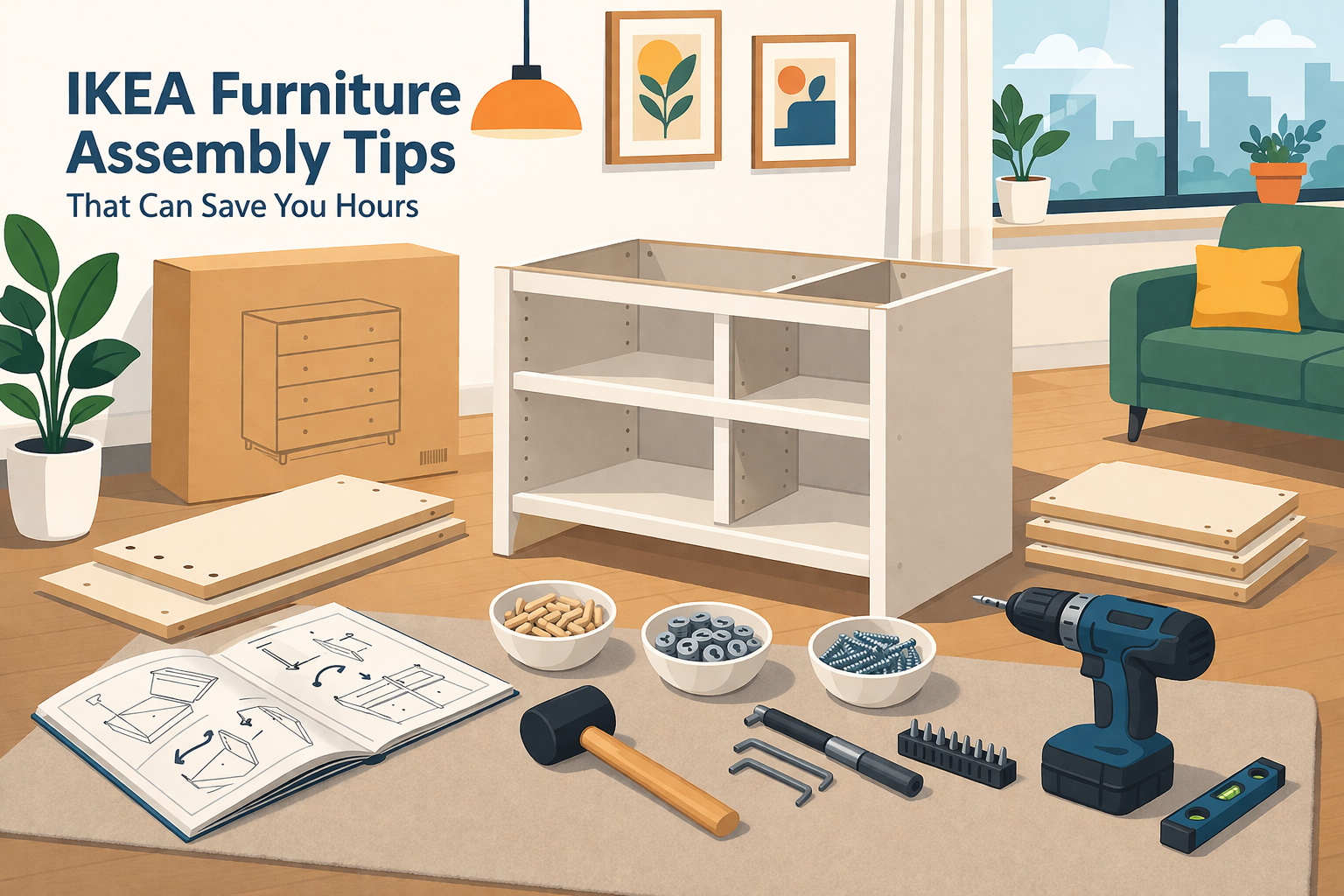
Assembling flat-pack furniture can be fun in theory and frustrating in practice. If you've ever turned a “quick” build into an all-day marathon, you’re not alone. Most people waste time because they make common mistakes—skipping steps, over-tightening screws, or ignoring safety. The good news is that assembling IKEA furniture doesn’t have to be a chore. With a structured workflow, the right tools, and a focus on safety, you can cut your build time dramatically while achieving professional results.
Why Assembly Takes Longer Than It Should
What slows most DIYers down isn’t the number of screws. It’s the need to backtrack:
Installing parts backwards and having to redo them
Mixing up hardware and hunting through bags mid-build
Tightening fasteners too soon, then loosening them to fix alignment
Ignoring leveling until the end
Skipping safety steps like anchoring
Eliminating rework is the fastest way to save hours. Professionals aren’t necessarily faster at turning screws; they’re faster because they don’t do things twice.
Your Step‑by‑Step Assembly Workflow
This repeatable system keeps you organized and ensures that each step sets up the next one.
1. Prepare Your Space
Start by clearing a larger area than you think you need. Lay down cardboard or a blanket to protect floors. Good lighting is essential. Working in a cramped corner or on a carpet will slow you down and increase the chance of damage.
2. Get the Right Manual
Search the product name on IKEA’s site and download the PDF instructions. They’re clearer than the paper booklet and easier to enlarge on a phone or tablet. Scan the entire document before you start so you understand the sequence of major sections.
3. Inventory and Sort Hardware
Open every box. Lay out all panels and confirm they’re not damaged. Separate screws, dowels, cam locks, and other hardware into cups or bowls according to their step in the instructions. Label them if necessary. This alone can shave off 20–30 minutes of rummaging.
4. Stage Your Tools
A basic toolkit saves huge amounts of time:
Drill or electric screwdriver – set the clutch to a low setting to avoid stripping particleboard
Hex (Allen) bit set – replaces those tiny wrenches
Bit extender – helps you reach awkward angles inside cabinets
Rubber mallet – seats dowels and panels without damaging the surface
Level – keeps everything square and prevents wobble
Having the right tools within reach means you won’t stop mid-build to search for something.
5. Build Subassemblies Flat
Assemble drawers, legs, and frames on the floor before you attach them to the main unit. Flat surfaces prevent twisting and make it easier to install fasteners at the correct angle. Confirm that each subassembly matches the diagram before moving on.
6. Check Orientation Before Tightening
Many IKEA pieces look similar from both sides. Before you lock anything in place, double‑check that panels and brackets are facing the right way. If you’re not sure, re‑read the instructions. Mistakes here are costly; undoing and redoing is where hours disappear.
7. Use Progressive Tightening
Do not fully tighten screws and cam locks the moment you insert them. Instead:
Snug everything so it holds together lightly.
Assemble the full structure.
Adjust for alignment and level.
Once everything looks square, apply final torque (by hand) to each fastener.
This prevents misalignment and keeps cam locks and particleboard from stripping.
8. Square and Level as You Go
Check for level after assembling the main frame, and again before installing doors or shelves. Adjust as needed. Uneven floors can make a seemingly well‑built cabinet wobble; sometimes you need furniture pads or shims.
9. Install Drawers and Doors
Once the main structure is square, add drawers and doors. Adjust hinge screws to align gaps evenly. Soft‑close hinges often have fine adjustments; take your time here so everything sits flush.
10. Anchor Tall Pieces
For bookcases, dressers, and wardrobes, anchoring is not optional. IKEA and health authorities warn that unanchored furniture can tip over, causing serious injury. Use the provided straps or brackets and secure them to a stud or appropriate wall anchor. It’s a quick step that protects your family.
11. Final Checks and Cleanup
After everything is assembled, give each fastener a final turn by hand to ensure it’s tight. Save the manual and extra hardware in a labelled bag—you’ll need them if you move or disassemble later. Re‑tighten screws after a few weeks of use as particleboard and hardware settle.
Tools That Save Time (And How to Use Them Correctly)
It’s tempting to throw money at every gadget you see on YouTube, but a focused set of tools does the job:
Cordless drill or driver: Use low clutch settings. Full power strips screws and cam locks.
Full hex bit kit: Matches the Allen sizes IKEA uses. Cheaper kits skip sizes you’ll need.
Bit extender: Enables you to drive screws in deep recesses without nicking panels.
Rubber mallet: Seats dowels and panels; wood or metal hammers can dent or crack particleboard.
Level: A small torpedo level is sufficient for most furniture.
The mistake many DIYers make is driving fasteners at full speed. Particleboard and cam locks are fragile; controlled torque and speed are critical.
Safety Comes First: Anchoring and Tip‑Over Prevention
Tall freestanding furniture can tip if weight shifts or children climb it. IKEA supplies wall‑anchoring kits for a reason, and Health Canada recommends using anti‑tip devices. Always:
Identify studs or use proper wall anchors if studs aren’t available
Follow the anchoring instructions exactly
Use the correct screws; long screws can pierce electrical wiring if you’re not careful
Test the stability after anchoring
Skipping this step undermines the entire build.
Troubleshooting Common Problems
Even with a plan, issues arise. Here’s how to handle them quickly:
Furniture wobbles: Check the floor for unevenness, re‑tighten all fasteners, and confirm the frame is square. Furniture pads or adjustable feet can solve many wobble issues.
Missing hardware: Go back through all packaging first—hardware often hides in cardboard folds. If it’s truly missing, order replacements through IKEA’s spare‑parts request form using the part number from the manual.
Stripped screws or cam locks: Stop immediately. Continuing to drive a stripped cam lock will ruin the hole. Extract the damaged hardware and replace it. If the hole is enlarged, you might need a repair kit or wood glue and a dowel to fill it.
Panels don’t align: Loosen nearby screws, adjust, and re‑tighten progressively. Don’t force misaligned parts; that’s how cracks start.
Should You DIY or Hire a Pro?
There’s pride in building your own furniture, but sometimes it makes sense to call in professionals. You should consider outsourcing when:
The piece is large or complex (wardrobes, kitchen cabinets, wall units)
Anchoring is required and you’re not confident with wall mounting
You lack the proper tools or space
You value your time at more than a few hours of frustration
IKEA itself promotes professional assembly as a time‑saving option. Recognizing when your project crosses from “fun weekend task” to “stressful time sink” is part of being smart with your resources.
When You Want It Done Right, Book 6ix Assembly
At 6ix Assembly, we specialize in IKEA and flat‑pack furniture. We bring the drills, hex bits, levels, and wall anchors so you don’t need to buy anything extra. We work in condos and houses across the GTA and take care of cleanup after the job. If your piece requires anchoring, we’ll secure it safely. Quotes are flat‑rate and transparent—no surprise fees.
If you’re short on time or just don’t want to spend your weekend wrestling with particleboard:
Get a flat‑rate quote
Book in 60 seconds
Download our free IKEA Assembly Time‑Saver Checklist (PDF)
Having a pro on call means you can focus on enjoying your new furniture, not building it.
Frequently Asked Questions
What tools do I actually need to assemble IKEA furniture faster?
A drill or driver with low clutch settings, a set of hex bits, and a bit extender are the core speed boosts. A rubber mallet and a level help with fit and stability.
Can a drill damage IKEA furniture?
Yes. Over‑torquing screws or using maximum speed can strip particleboard and cam locks. Always set the clutch low and finish tightening by hand.
Why does my IKEA furniture wobble after assembly?
Uneven floors, loose fasteners, or missed alignment checks are the usual culprits. Re‑level and re‑tighten; add furniture pads if needed.
Do I really need to anchor a dresser or bookcase?
For tall freestanding pieces, yes. Anchoring prevents tip‑over accidents. IKEA includes straps or brackets, and public health agencies recommend using them.
What if I’m missing screws or hardware?
Double‑check the packaging. If parts are missing, order replacements from IKEA using the part number from the instructions.
Where can I find the assembly instructions?
Search the product name on IKEA’s website and download the PDF under “assembly documents.”
Is it worth paying for assembly instead of DIY?
If the project is complex, time‑consuming, or safety‑critical, outsourcing can be cost‑effective. Assembly services bring tools, know the workflow, and include anchoring.
What should I do with instructions and extra parts after assembly?
Keep them. Spare hardware and manuals make future moves or disassembly easier.
