
Gazebo Assembly: How Professionals Navigate Small Backyards
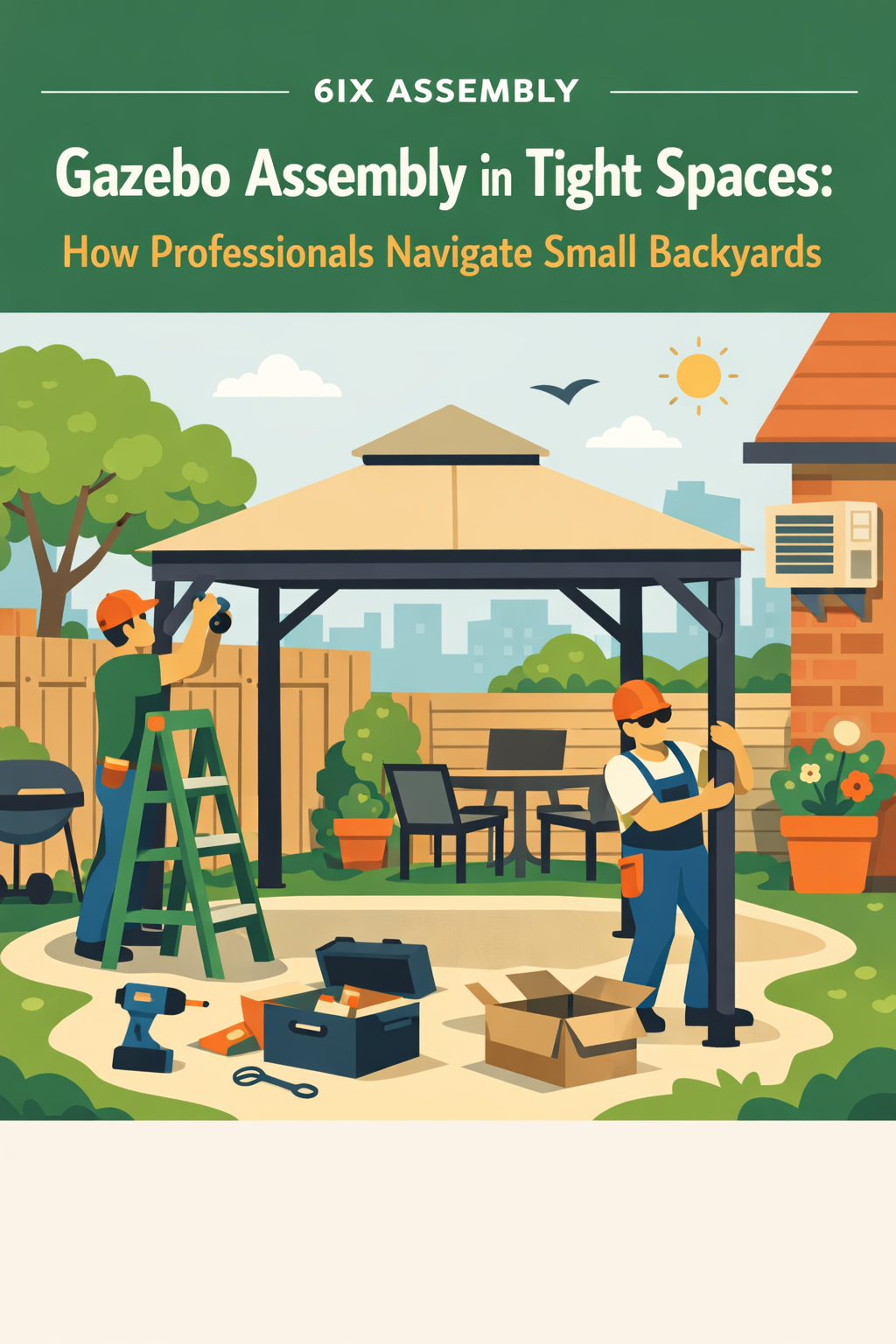
Installing a gazebo in a tight Toronto or GTA backyard isn’t as simple as dropping a kit and building it. Limited access, narrow gates, uneven ground, and local bylaws can turn a straightforward project into a logistical problem fast.
This guide breaks down how professionals handle gazebo assembly in confined spaces. From site planning and choosing the right model to transport strategies, tools, safety, and permits, you’ll understand exactly what it takes to get it done properly.
Why Tight Backyard Installs Are a Different Game
Most people underestimate one thing: access.
You’re not just building a gazebo. You’re figuring out how to:
Get materials through narrow gates
Assemble large structures with no room to maneuver
Avoid damaging fences, decks, or landscaping
Keep everything level in uneven, compact spaces
That’s where experience separates a clean install from a disaster.
Step 1: Proper Site Assessment (Don’t Skip This)
Before anything gets delivered, professionals map everything out.
What gets checked:
Gate and pathway width (36” gates are common bottlenecks)
Obstacles like trees, AC units, fences, stairs
Ground condition and level
Clearance around the structure
Roof height vs surrounding structures
If you can’t physically get parts into the yard, nothing else matters.
A quick mistake here can cost you hours or force you to dismantle parts mid-job.
Step 2: Choosing the Right Gazebo for Tight Spaces
Not all gazebos are equal. Some are a nightmare in small yards.
Best Options for Tight Spaces
Pop-up / Canopy Gazebos
Easiest install
Lightweight and portable
Perfect for small decks or temporary setups
Metal Gazebos (Panel Systems)
Modular pieces make transport easier
Strong and weather-resistant
Good balance of durability and install difficulty
Vinyl Gazebos
Pre-formed panels
Lower maintenance
Still manageable in sections
Worst Option in Tight Spaces
Large Wooden Gazebos
Extremely heavy
Bulky beams
Hard to maneuver through tight access
Unless the space is wide open, these can turn into a multi-day headache.
Step 3: Breaking Down the Assembly Strategy
In tight spaces, you don’t build normally.
You adapt.
What pros actually do:
Carry parts individually instead of full sections
Assemble frame first, roof last
Build components outside, finish inside
Use staged assembly instead of full layout builds
Sometimes, even roof sections are partially built outside and lifted in piece by piece.
Step 4: Moving Materials Through Narrow Access
This is where most DIY jobs fall apart.
Techniques professionals use:
Angling long beams diagonally through gates
Using dollies or shoulder straps for heavy pieces
Bringing in panels one at a time
Temporarily removing fence sections if needed
No plan = wasted time and scratched property.
Step 5: Tools That Actually Matter
You don’t need everything. But what you need, you really need.
Must-have tools:
Drill and impact driver
Socket set
Level
Tape measure
Ladder
Work gloves and safety glasses
Helpful add-ons:
Panel lifters
Extra ladders
Temporary supports
Concrete tools (if anchoring)
The difference between struggling and working efficiently is usually just having the right setup.
Step 6: Ground Prep and Anchoring
A gazebo is only as good as what it sits on.
Key points:
Surface must be level
Avoid soft or uneven soil
Use anchors or concrete where required
Watch for drainage issues
Skipping this step leads to:
Wobbling
Misalignment
Long-term structural issues
Step 7: Safety (Where Most People Get Sloppy)
This isn’t IKEA furniture. You’re dealing with weight, height, and leverage.
Non-negotiables:
At least 2 people on site
Gloves and eye protection
Stable ladders
No assembly in wind or bad weather
One mistake here and you’re dealing with injuries or damaged materials.
Step 8: Toronto Permit Rules (Don’t Ignore This)
In the GTA, this matters.
General rule:
Under 10 m² → usually no permit
Over 10 m² → permit required
Also:
Must meet setback requirements
Height limits apply
Attached structures always need permits
If you skip this and get flagged later, you’re tearing it down or paying fines.
Real-World Tight Space Scenarios
Narrow Gate Installation
Gazebo delivered in parts, carried through a 36” gate, assembled fully on-site. Frame first, roof last.
Side Yard Lean-To Setup
Wall-mounted gazebo eliminates side clearance issues and reduces footprint.
Small Deck Pop-Up Setup
Quick install solution for tight outdoor spaces with zero heavy lifting.
Common Problems (And How Pros Fix Them)
Misaligned holes
Loosen everything, realign, then tighten
Uneven frame
Level first, tighten second
Wobbly structure
Check anchors and fasteners
Roof panels catching wind
Install last and secure immediately
Cost and Time Expectations
Small gazebo: $500 to $2,000
Large builds: $3,000 to $8,000+
Installation: 1 to 3+ days depending on complexity
Tight spaces usually increase labor time. No way around that.
Final Checklist Before You Start
Measurements confirmed
Access path clear
Ground leveled
Tools ready
Weather checked
Assembly plan set
If even one of these is off, expect delays.
Final Thoughts
Gazebo assembly in tight spaces isn’t about brute force. It’s about planning, sequencing, and knowing how to adapt.
That’s exactly where professionals bring real value. Clean installs, no damage, no wasted time, and no surprises.
