
Ultimate Guide: Assembling Outdoor Furniture
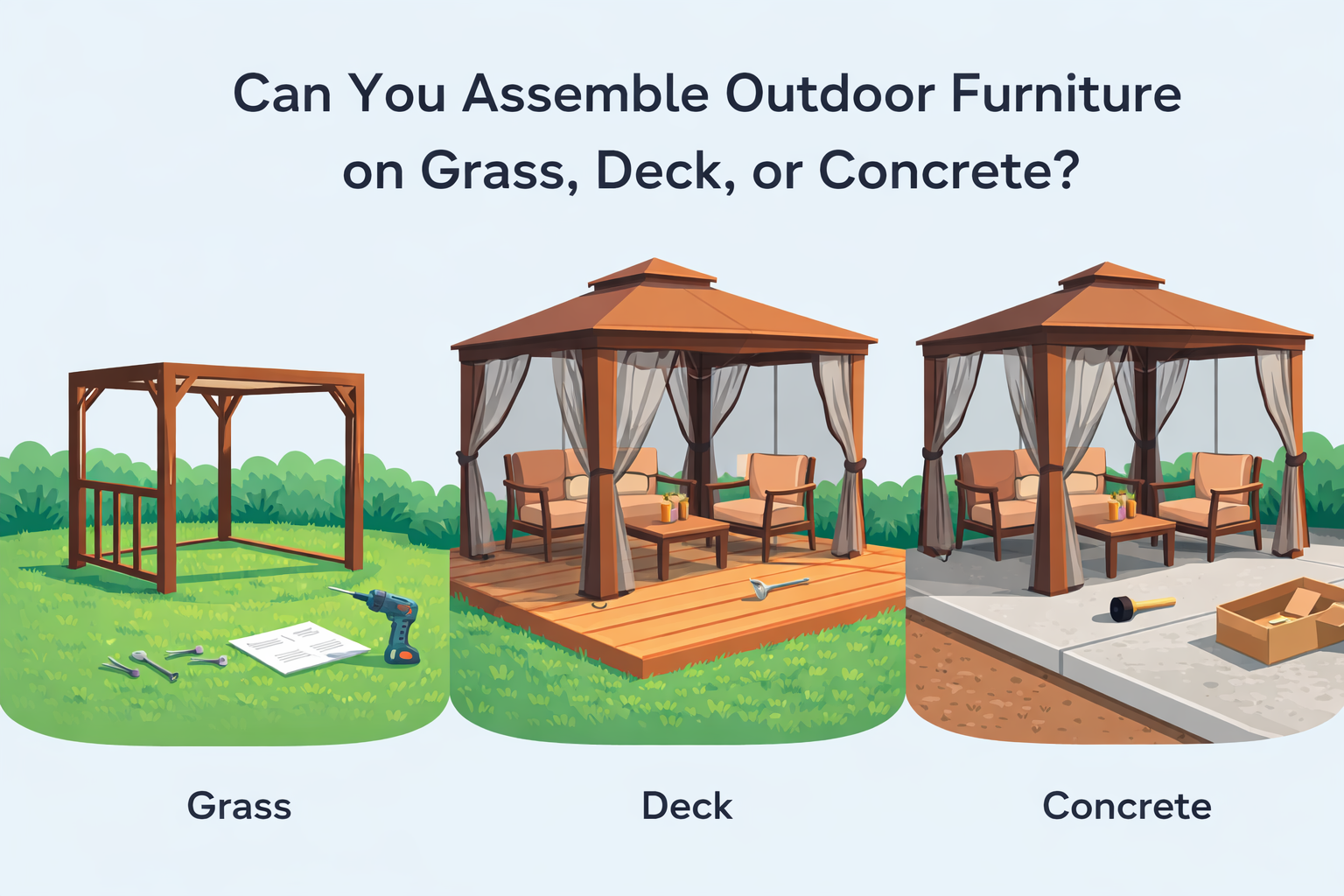
How to Assemble Patio Furniture on Grass, Deck, or Concrete in Toronto
Assembling outdoor furniture isn’t just about following instructions. The surface you choose plays a huge role in stability, safety, and long-term durability.
In Toronto and across the GTA, homeowners deal with everything from soft grass lawns to condo balconies and concrete patios. Each surface has its pros, risks, and best practices.
At 6IX Assembly, we always recommend working on a stable, level surface to prevent tipping, damage, or uneven builds.
This guide breaks down exactly what you need to know before setting up your patio furniture this summer.
Grass vs Deck vs Concrete: Which Surface Is Best?
Here’s a quick breakdown:
Grass / Lawn
Soft and forgiving surface
Easy for temporary setups
Can sink or shift easily
Often uneven and unstable
Wood Deck
Flat and ideal for assembly
Easy to level furniture
Can scratch or dent without protection
Composite Deck
Durable and weather-resistant
Smooth surface
Can be slippery when wet
Concrete Patio
Most stable and level option
Best for heavy furniture
Hard surface can damage finishes if dragged
Gravel or Stone
Not recommended directly
Highly unstable without a base
Key Rule: Always Work on a Level Surface
Furniture manufacturers consistently emphasize this:
Always assemble furniture on a flat, stable surface to prevent tipping or structural issues.
If your surface isn’t level, your entire setup can end up:
Wobbly
Misaligned
Under stress long-term
How to Assemble on Each Surface (The Right Way)
1. Assembling on Grass
Yes, you can assemble on grass but only if you stabilize it.
Best practices:
Lay down plywood or boards under legs
Avoid soft or muddy ground
Check level constantly during assembly
Use adjustable feet to correct uneven spots
Big mistake: assembling directly on uneven lawn without support
2. Assembling on a Wood or Composite Deck
This is one of the best surfaces to work on.
Best practices:
Use rubber or felt pads under furniture legs
Avoid dragging pieces across the deck
Keep tools and hardware off bare wood
Use cardboard or tarp underneath your work area
Decks are ideal but easy to damage if you're careless.
3. Assembling on Concrete
Concrete is the most stable and professional setup surface.
Best practices:
Use cardboard or tarp to protect finishes
Lift furniture instead of dragging
Watch for uneven or cracked areas
Wipe down dust after assembly
Concrete is great for precision, especially for larger items like gazebos or dining sets.
4. Avoid Assembling Directly on Gravel
Gravel is one of the worst surfaces for assembly.
If you have no choice:
Lay down plywood sheets first
Create a stable working platform
Check level constantly
Otherwise, move to a deck, patio, or even grass with support.
Tools & Equipment You Should Have Ready
Before starting, make sure you’re prepared:
Rubber mallet or soft hammer
Level
Power drill with bits
Screwdrivers / Allen keys
Rubber pads or furniture feet
Tarp or cardboard
Tape measure
Work gloves
Step ladder for taller builds
Having the right setup makes the job faster and prevents mistakes.
Summer Assembly Tips (Toronto Edition)
Summer adds a few extra factors you can’t ignore:
Avoid assembling during peak heat
Work early morning or evening
Never assemble on wet grass or slippery decks
Check weather before starting
Wind can affect alignment for larger structures
Toronto summers can be unpredictable, so timing matters.
Condo & Balcony Considerations
If you're in a condo, things get more technical.
Important points:
Most balconies support around 40 to 60 lbs per square foot
Distribute weight evenly
Avoid placing heavy furniture all in one area
Check building rules before installing large items
Also keep in mind:
Elevator bookings
Access restrictions
Noise rules
Do You Need a Permit in Toronto?
For basic furniture assembly, no permit is required.
However:
Structures like pergolas or platforms may require permits
Any deck over 24 inches high typically needs approval
Always double check before installing anything permanent.
Customer Prep Checklist (Before Assembly Day)
If you want a smooth install, do this first:
Clear the entire area
Remove debris, stones, or obstacles
Prepare access paths
Lay down protective tarp or boards
Organize parts and hardware
Keep pets and kids away
Confirm parking or building access
This alone can cut assembly time significantly.
Step-by-Step Assembly Workflow
Here’s how professionals approach it:
1. Prep the site
Lay tarp or boards and organize parts
2. Build the main frame
Start on the flattest surface available
3. Attach supports and legs
Ensure everything stays level
4. Install main components
Seats, slats, or panels
5. Add accessories or tables
Work on stable surfaces whenever possible
6. Final tightening and leveling
Check from multiple angles
7. Cleanup and inspection
Remove packaging and test stability
How to Prevent Damage During Assembly
Simple rules most people ignore:
Never drag furniture across surfaces
Always lift and place
Use pads under legs
Avoid moisture buildup under furniture
Clean debris immediately
Most damage happens during assembly, not after.
Toronto & GTA Local Tips
Reserve parking if possible
Ensure clear access to backyard or patio
Book elevator time for condos
Have lighting ready for evening jobs
Confirm any building restrictions ahead of time
These small things make a huge difference.
Frequently Asked Questions
Can you assemble outdoor furniture on grass?
Yes, but use boards or mats underneath to stabilize the surface.
Is a deck a good place for assembly?
Yes, just protect it with pads and avoid dragging furniture.
Is concrete the best option?
Yes, it’s the most stable and reliable surface.
What about gravel?
Not recommended unless you create a solid base first.
Do I need special tools?
Basic tools plus a level, drill, and protective materials.
Will my balcony support furniture?
Most do, but weight should be distributed evenly.
Final Thoughts
The surface you assemble on directly affects:
stability
safety
long-term durability
Getting it wrong can lead to:
uneven builds
damaged surfaces
unsafe setups
Getting it right means your outdoor space looks clean, solid, and ready for summer.
Ready to Set Up Your Outdoor Space the Right Way?
If you want it done properly the first time, without the stress, guesswork, or risk of damage:
6IX Assembly provides premium, insured furniture assembly across Toronto and the GTA, including patios, gazebos, outdoor sets, and more.
We handle everything from setup to cleanup, so you can just enjoy your space.
Get your quote today and let’s get your outdoor setup summer-ready.
