
Secure Wall Mounting Guide: Tips & Tricks
Mounting a TV, cabinet, or shelves isn’t just about drilling into a wall and hoping for the best. Different wall types have completely different strengths, and using the wrong anchor can lead to serious damage, injuries, or your setup crashing to the floor.
This guide breaks down exactly how to mount things safely, choose the right anchors, and avoid the mistakes that most people make.
Know Your Wall First
Before you even think about drilling, you need to understand what you’re working with.
Wood Stud Walls
Most homes in Toronto and the GTA use wood framing behind drywall.
Studs are usually spaced 16″ or 24″ apart
Screwing directly into a stud is the strongest possible option
A properly installed screw can hold hundreds of pounds
Metal Stud Walls
Common in condos and newer buildings.
Much weaker than wood studs
Regular screws won’t hold well
Heavy items require special anchors or multiple supports
Concrete, Brick, or Block
Solid walls, typically in basements or commercial buildings.
Extremely strong when done right
Require masonry anchors (Tapcon, sleeve, wedge, epoxy)
Can support very heavy loads
Plaster and Lath (Older Homes)
More unpredictable and brittle.
Harder to locate studs
Cracks easily
Requires toggles or careful anchoring
Finding Studs Properly
This is where most DIY jobs go wrong.
Here’s how to actually do it right:
Use a magnetic or electronic stud finder
Look near outlets and baseboards (studs are often beside them)
Tap the wall and listen
Hollow sound = empty
Solid sound = stud
Use a small test hole if unsure
Always be cautious. There could be electrical wires or plumbing behind the wall.
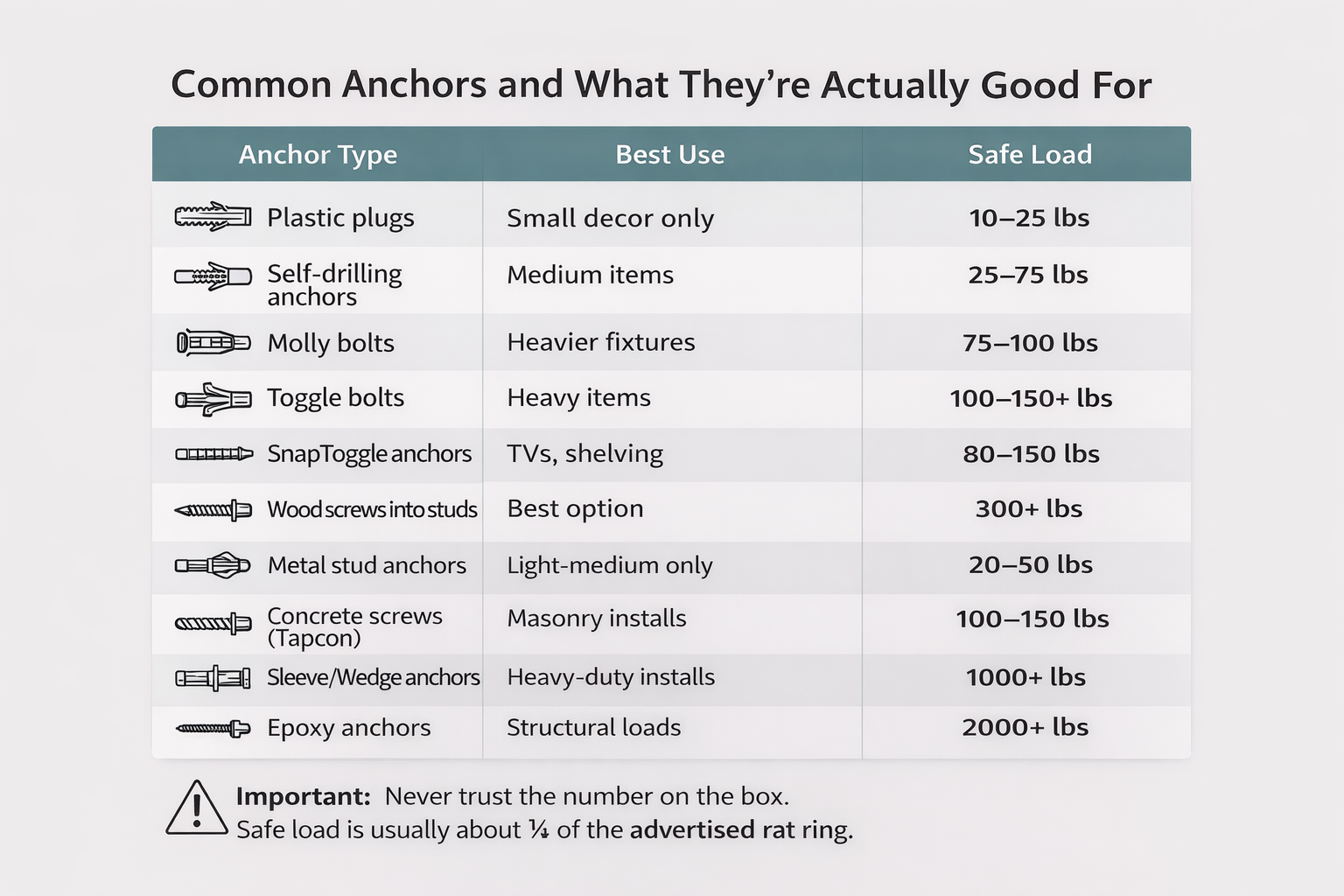
Choosing the Right Anchor (This Matters More Than You Think)
Here’s the reality: most failures happen because people cheap out or use the wrong anchor.
Installation Mistakes That Will Ruin Your Mount
Most people don’t mess up the anchor… they mess up the install.
Do This Instead:
Drill the correct size hole
Clean out dust (especially in concrete)
Pre-drill into wood studs
Don’t overtighten and strip the anchor
Use multiple anchors for heavy items
Always level before drilling
If one anchor spins or feels loose, it’s already compromised.
Safety Risks You Shouldn’t Ignore
Bad mounting isn’t just cosmetic. It can actually be dangerous.
Real Risks:
TVs falling and causing injury
Shelves collapsing
Drilling into electrical wires
Hitting water or gas lines
How to Avoid It:
Always overestimate the weight
Use stronger anchors than you think you need
Shut off power if unsure
Use proper tools and safety gear
Inspect mounts after installation
Step-by-Step: Mounting Heavy Items Properly
If you’re doing it yourself, follow this exact workflow:
Plan placement and mark positions
Locate studs or confirm wall type
Choose the correct anchors
Drill pilot holes
Verify what you’re drilling into
Install anchors securely
Mount the fixture evenly
Test before fully loading
Rushing any of these steps is how things fail.
The Reality Most People Ignore
Here’s the truth:
Plastic anchors are trash for anything heavy
Metal studs are not reliable for large loads
Most “DIY installs” are hanging by luck, not strength
If you’re mounting something expensive like a TV or cabinetry, guessing is not a strategy.
When It Makes Sense to Call Professionals
If your setup involves:
Large TVs
Condo metal studs
Concrete drilling
Heavy cabinets or shelving
High-end finishes you don’t want to damage
It’s smarter to get it done properly the first time.
Final Thoughts
Safe wall mounting comes down to three things:
Understanding your wall
Choosing the right anchors
Installing everything correctly
Cut corners on any of these, and you’re gambling with your setup.
Need It Done Right?
At 6IX Assembly, we handle mounting the right way.
Clean, precise installs
Proper anchor selection for every wall type
No guesswork, no shortcuts
Built to hold, not “hopefully stay up”
If you want it done once and done properly, we’ve got you.
